
Doling Out The Music

My order from Rockabuy Records came through today. Well they had an Easter sale, what’s a fella supposed to do? My bunch of goodies included UB40’s ‘Signing Off’, released in 1980.
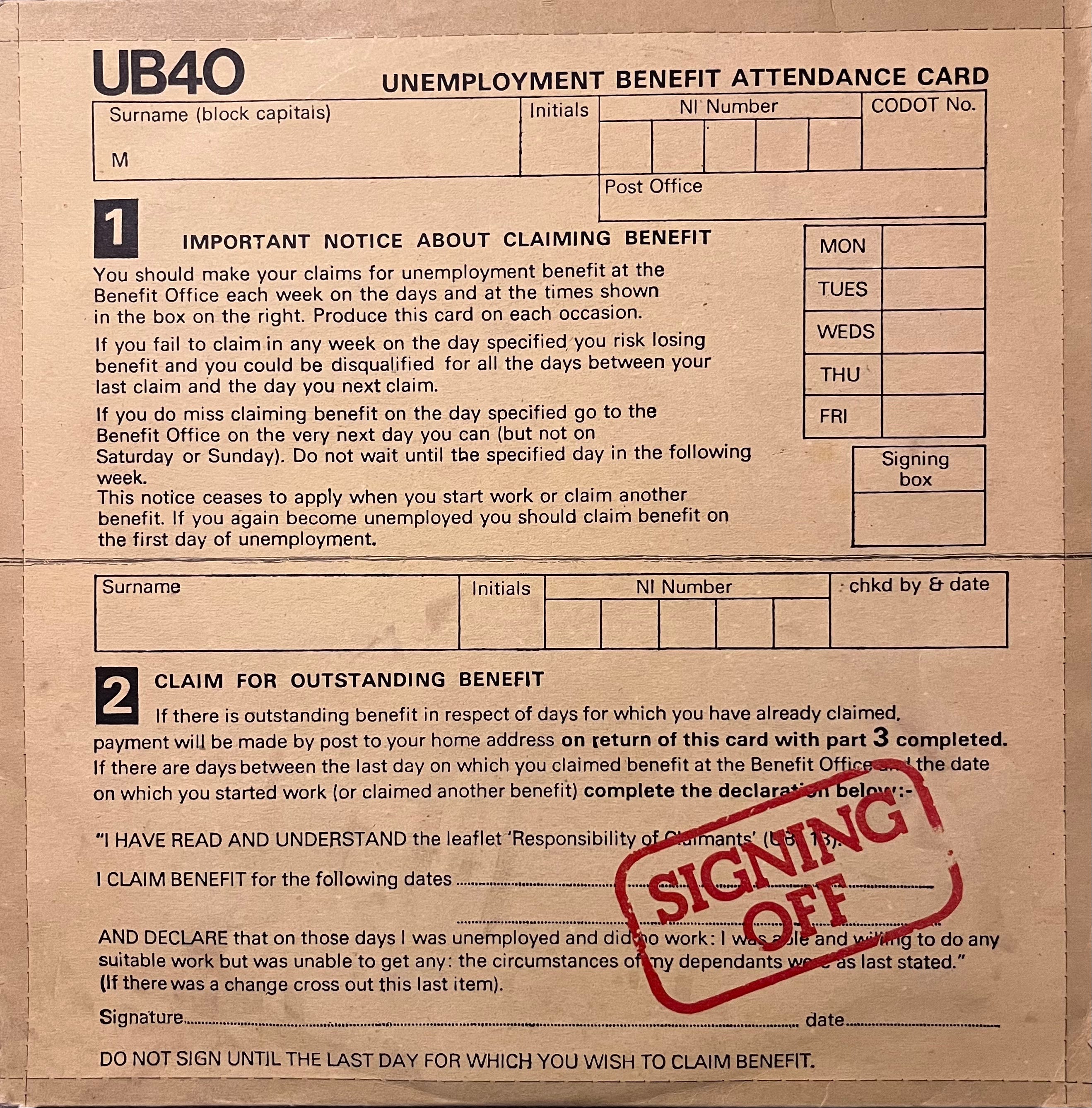
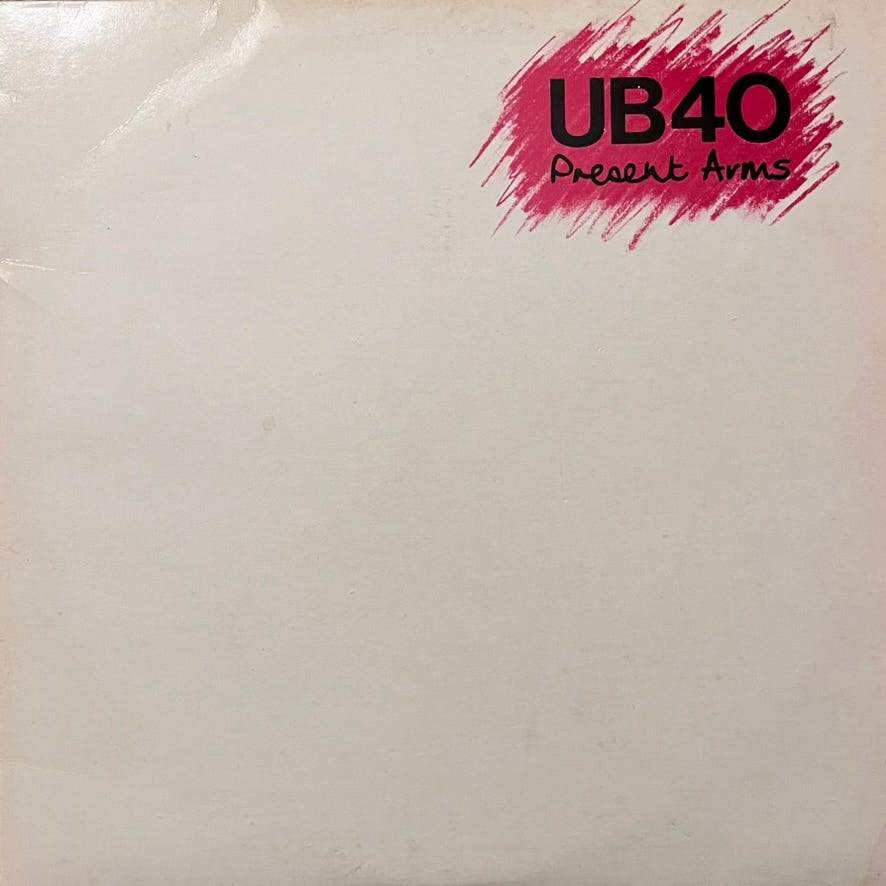
This particular album, along with the brilliant ‘Present Arms’, released just a few months later in 1981, still have a special place in my life. I bought ‘Signing Off’ partly in the hope that I would be doing just that after spending months on the dole.
On January 17th, 1981 Mags, 18 month old Heather and I moved to Cornwall, and in April I finally landed a seasonal job at a seaside entertainment complex. We caught the bus into town, then walked around two miles in blazing heat to get to my interview. I must have made an impression despite being dressed in a weary looking suit jacket, a pair of threadbare cords and some old faithful maroon leather boots. Later, my new employer told me he had caught a glimpse of Mags and Heather sitting on the sandy beach and felt sorry for us. That had been the clincher, apparently. Ah well.
The money was rubbish but there was the compensation of sun, sea, and countless live acts to catch in between keeping five bars stocked with booze. One of those acts arrived on 1st June and made a lasting impression on me. The band was UB40. I remember we played lunchtime football with the road crew on that grey day. In the evening I caught most of their performance and was deeply affected by it. I confess, the day after, I went straight to the local record store and bought ‘Present Arms’ with money I could ill afford to spend.
That summer was just about the most surreal season of my life. Working for a pittance but often lurking quietly during soundchecks just feet away from the likes of Paul Weller, Adam Ant, and The Kinks, delivering bar orders to the dressing rooms, finishing work late and arriving home in the small hours. It was a precarious existence, something I was aware of from the moment I was taken on. At the end of the season I was offered reduced hours, which I accepted until early in 1982. Rather than lose the job altogether I visited the dole office to explain the new arrangement, hoping for some financial assistance until full-time work resumed. I was being a good boy and, as successive governments have since placed great emphasis on, doing the right thing. Except it was the wrong thing, at least according to the supervisor dealing with the new claimants’ queue. She told me in no uncertain terms that I was losing out financially by working part-time, and advised me to quit in order to be better off with a higher benefit payment. So I reluctantly gave my notice and, sure enough, we had more money coming in with no work than with part-time work. Go figure.
Every Friday evening News At Ten totalled up the jobs lost regionally and compared the figure with jobs created. It made for grim reading. During the autumn of 1982 the BBC screened Alan Bleasdale’s bleak reflection of Thatcher’s Britain in ‘Boys From the Blackstuff’. Once more, I was deeply affected. I resolved to pick up the threads of my own writing and began to pour my angst and festering grievances onto sheets of foolscap. Long handwritten pages of what I hoped would turn into something a little Bleasdale-like. I wrote letters too. Long, wordy protests at unemployment sent to MPs, union leaders, and a particularly lengthy one to Thatcher herself. I still have the blunt reply.
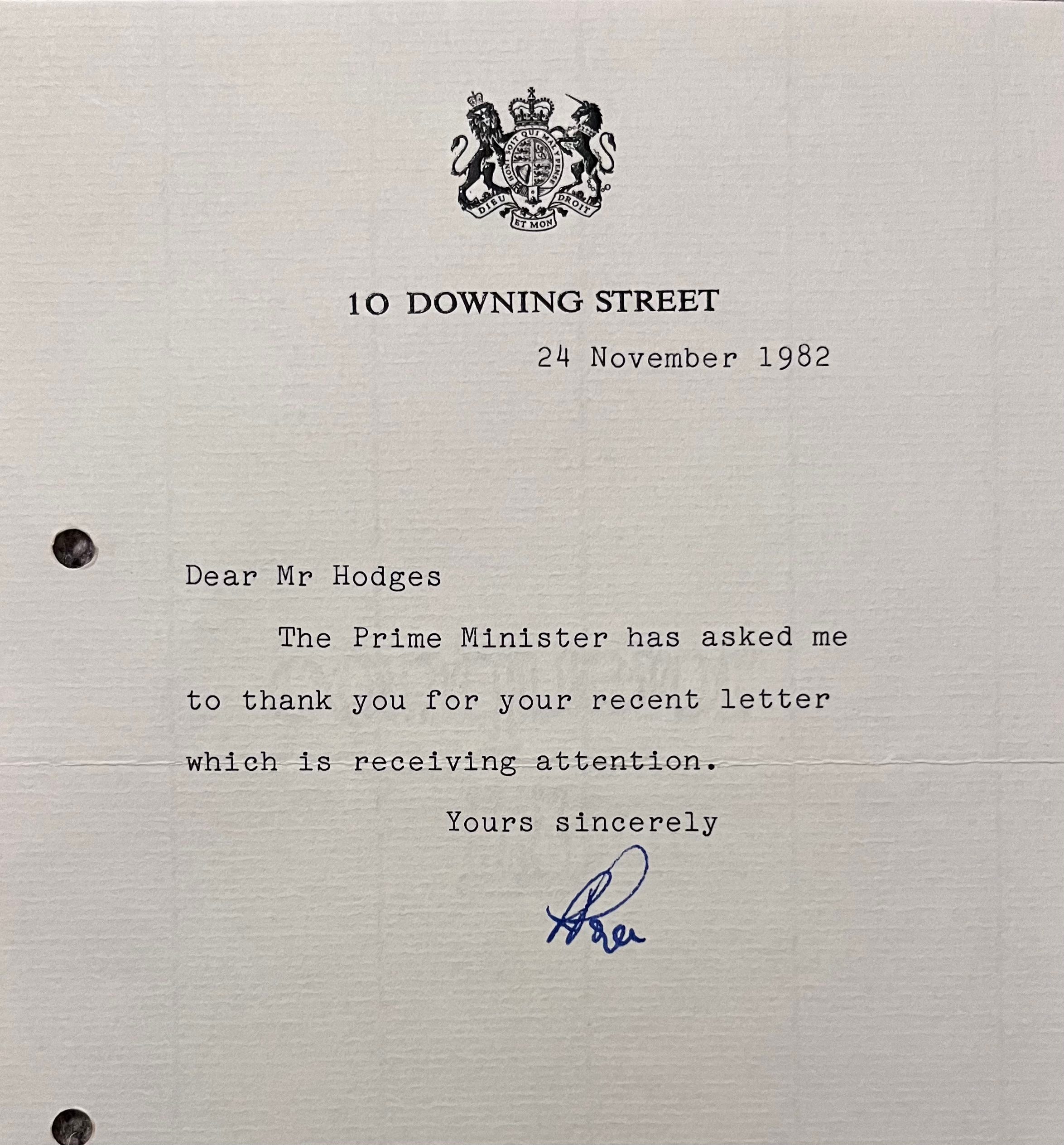
However, my interaction with Downing Street didn’t end there. The letter did indeed receive attention, and I was summoned to the local social security office for an ‘urgent’ interview. For several anxious minutes I was grilled by two officials who eventually informed me that, because of my letter to the PM, my now ‘special’ file was being handled by a lady called Joan, who I had to report to directly until further notice. Joan was lovely, by the way. A sympathetic soul who gave me good guidance and encouraged me to continue writing and not give up. I followed her advice and kept submitting articles while concentrating on some ideas for TV play scripts, one of which Alan Bleasdale kindly gave me pointers on. Here was an extremely busy man who put his money where his mouth was. He took time to send me annotated Blackstuff scripts and offered loads of encouragement. He’ll never know how much of a boost he gave me and mine, casualties of Thatcherism and mere statistics among the other four million who were struggling. My scripts fell on stony ground but allowed me to explore a valuable learning curve that stood me in stead in the years ahead.
Often whilst writing I had ‘Present Arms’ on repeat play, the track ‘Don’t Let It Pass You By’ getting cranked up and ringing loudly around our 120 year old rented cottage. Nowadays at this stage of the game I guess I’ve pretty much let ‘it’ - whatever ‘it’ might have been - pass me by, but I’m okay with that. Back then though, at such a low ebb, and with UB40 playing, there was still the promise of possible success. That dream, along with the music kept me sane, for sure.
UB40 were very popular when I lived in Malawi in the early 1990s.
With regard to my own writing, I look back and remember the saying that it is sometimes better to travel hopefully than to arrive.